
When creators reply on Instagram, their posts perform better relative to their own baseline, according to a study of more than 700K posts.
I use AI to create social media content every single day, but probably not in the way you're thinking. Instead of typing in a prompt and then publishing, AI is woven into almost every stage of how I think, draft, design, and ship content. At Buffer, and on my own social media, I've grown to over 20,000 followers across platforms.
But it took a while to get here. A year ago, my AI usage looked like most people's: open ChatGPT, ask it to write a caption, get something generic back, rewrite the whole thing anyway, and wonder what the point was. The problem wasn't the tools, it was that I was using them one-dimensionally when the real leverage was everywhere else.
Once I started using AI earlier in my process (to feed my thinking, not just my content calendar) and later (to automate the busywork eating my creative energy), the quality of my output changed. Not because AI was writing better posts for me, but because I was writing better posts with AI handling the friction.
I've tested a lot of tools. These are the 14 that stuck, organized by where in my workflow they come in, starting well before I open a blank page.
Jump to section
- Tools to…
- Tools to feed your brain
- Sublime
- Tools to process ideas
- Granola
- Poppy AI
- Tools to test and refine ideas
- Claude AI
- ChatGPT
- Notion AI
- Tools to draft, edit, and publish
- Grammarly
- Buffer’s AI Assistant
- Tools to create visuals
- Canva
- Adobe Express and Firefly
- Nano Banana Pro (Gemini)
- Figma Make + Lovable
- Tools to create video and audio
- CapCut
- Adobe Premiere Pro and Podcast
- Descript
- OpusClip
- Tools to automate content creation workflows
- Zapier
- Tools that don’t fit my workflow
- Tools that don’t fit my preferred approach to content
- Tools I haven’t tried enough
- AI handles the how — you still own the what and why
- FAQs
Tools to feed your brain
Before I open a single drafting tool, I invest in my inputs. I'm a firm believer that the quality of my content is directly tied to the quality of what I consume. But compared to the amount of time and energy I have, there are infinite amounts of content and connections to be made. This is where this tool comes in: they help make that process easier and more repeatable.
Sublime
Best for: Building a personal library of ideas that makes your thinking more interesting over time
Working in marketing, I inevitably consume much of the same content as everyone else in my field. Where I want to break away is in making connections and having a unique perspective, so my content doesn't feel derivative. Sublime helps me do that.
When you save something to Sublime — a quote, a link, an image, a note — it immediately surfaces related ideas from other people's libraries. Sublime's founder, Sari Azout, calls this "communal knowledge management.”
In practice, it feels less like a productivity tool and more like browsing the reading lists of the most interesting people you know. You can also import your existing Kindle highlights and Readwise notes, so you're not starting from scratch — the inputs you've already found interesting become the foundation of your library.
Sari’s framing is one I come back to often: the secret to better AI output isn't better prompts — it's better inputs. There's a real difference between asking AI to "write me something about personal branding" and handing it 40 ideas you've been collecting about identity, craft, and audience-building and asking it to find the thread.
My favorite thing to do with the ideas I find through Sublime is to pull them into collections and then go one of two directions: I'll either generate a metadata summary and connect it to an AI tool that already has my voice and content style memorized, which kicks off the idea development process for future posts. Or I'll drop them onto a digital infinity board and start playing with the flow — rearranging ideas, adding my own notes and external context until a shape emerges.
It does require active engagement, though. You have to sit with what it surfaces, not just save it to a folder you'll never reopen. Curation without synthesis is just hoarding.
Price: Free (basic); from $75/year
Tools to process ideas
There's a messy middle stage between having raw inputs and having something I can actually draft.
Sometimes I need to extract structure from my own rambling — I talked through an idea, and now I need to find what's actually worth keeping.
Other times I've got the opposite problem: scattered references across tabs, notes, and half-watched videos, and I need to synthesize them into something coherent that still sounds like me. These tools help me handle both.
Granola
Best for: Turning spoken ideas into structured starting points
Granola is technically a meeting transcription tool — it captures audio directly from my device (no awkward bot joining the call) and uses AI to turn raw conversation into organized notes. But that's not why it's on this list.
The use case I lean into for Granola is thinking out loud. I open it, start talking through a rough content idea — no structure, no polish, just working through what I'm trying to say — and when I'm done, the AI extracts the key threads, the strongest points, the structure that was hiding inside the ramble. What I get back isn't just a transcript. It's a starting point.
@tripleotami When ideas won't wait for a convenient moment, so you just… interrupt everyone 😬 (my team has been very patient with me) This is how I use Granola to stay present in meetings without losing every thought that pops up. (Look out for @annabullock’s breakdown of how to turn those ideas into content) #productivitytok #remotework #aitools #creatorsoftiktok
If you've ever sent a voice note that was clearer than your written draft, or explained a post to a friend better than you wrote it, you’re likely a verbal processor. Granola makes that instinct productive.
I could arguably do this with most chatbots' voice modes — ChatGPT, Claude, even a basic voice memo plus a manual summary. Granola's edge is that it's purpose-built for capture and extraction. It's not trying to have a conversation back at me. It's just listening and organizing.
I’m not the only one at Buffer who uses voice dictation to process my thinking. Here are a couple of articles from fellow verbal processors on the team to dig deeper into rambling-as-processing.
📚 How I Create Social Media Content As a Verbal Processor: 3 Easy Steps
📚 How AI Dictation Tools Changed The Way I Work (And Which Ones Are Worth It)
Price: Free (basic); $14/user/month for unlimited
Poppy AI
Best for: Visual thinkers who need to synthesize multiple sources into content as quickly as possible
Poppy's interface is a visual canvas. I drag in YouTube videos, TikToks, articles, PDFs, voice notes — whatever raw material I'm working with — and organize it into groups that the AI can pull from simultaneously. For people who think spatially, who need to see their inputs laid out before they can make sense of them, this is the unlock.
I use it primarily for scripting — YouTube videos, short-form content, anything where I want the output to actually sound like me rather than generic AI-speak. My typical setup looks like this:
- Group 1: Examples of my own previous content (this teaches it my voice)
- Group 2: Reference videos I want to study — not to copy, but to learn from their structure, hooks, pacing
- Group 3: The working draft, where the AI pulls from both groups simultaneously
That last part is what makes it click. The AI isn't just generating from a blank prompt. It's synthesizing my voice from Group 1 with the structural patterns from Group 2. The output still needs editing, but I'm starting from something that sounds like me riffing on ideas I actually care about — not a generic script template.
I can also access multiple models (ChatGPT, Claude) within the same workspace, which is useful when I want to compare outputs or use different models for different parts of the process.
A few things worth knowing before you commit: Poppy's marketing runs hot — income claims, countdown timers, hustle-culture energy. The actual tool underneath is more thoughtful than its landing page suggests, but it's a meaningful investment. Plans are annual only with a credit-based system, so it's worth testing within the 30-day money-back guarantee before you go all in.
Price: From ~$400/year (annual billing only; 30-day money-back guarantee)
Tools to test and refine ideas
Here's what I've found works better than asking AI to write my content: asking it to help me think through my content. To push back on my framing, suggest structures I haven't considered, and help me figure out what I'm really trying to say before I try to say it publicly.
Claude AI
Best for: Strategic sparring and seeing ideas before I build them
Claude is my thinking partner. Not my ghostwriter — my sparring partner. That distinction matters more than any feature list.
What makes Claude uniquely useful for content work is the combination of deep reasoning and the ability to actually show me things. I go back and forth on content structure — "here's my rough idea, what's the strongest way to organize this?" — and Claude pushes back, suggests alternatives, pokes holes in my logic. But it can also visualize what we're discussing: prototype a web page layout, mock up a report structure, build a working preview of a landing page. I'm not just talking about ideas in the abstract. I'm looking at them.
For our upcoming State of Social Engagement report, I went back and forth with Claude over multiple rounds until the structure clicked. It wasn't a "write me a report outline" situation — it was genuine sparring where I'd say "this section doesn't land because…" and Claude would come back with a different approach. That iterative process is where the real thinking happened. I've also used it to prototype web page layouts before sharing concepts with my team. Being able to see the structure, not just describe it, helps me come to conversations better prepared.
The sparring only works if I actually push back, though. If I accept Claude's first suggestion, I'm not sparring — I'm delegating. I tell it why its suggestion doesn't work. I ask it to try a completely different angle. That's where the good stuff happens.
Price: Free (limited); starts from $17/month for Pro. If budget is tight, the free tier handles basic sparring — you'll just hit message limits faster on heavy drafting days.
ChatGPT
Best for: Brainstorming that gets smarter the longer you use it
ChatGPT's biggest edge for content work isn't its writing ability — it's its memory. As of mid-2025, ChatGPT doesn't just remember things I've explicitly asked it to save. It references my entire conversation history to tailor its suggestions. When I ask for ideas, it doesn't start from zero. It draws on topics I've explored, preferences I've expressed, patterns in how I think — across months of conversation.
This is what makes ChatGPT and Claude different jobs, not competitors. Claude is where I go to wrestle with an idea and stress-test structure. ChatGPT is where I go when the brainstorm needs my personal context — when I want suggestions that reflect my voice, my audience, my recurring themes.
Watch out, though: Memory can quickly become an echo chamber. If ChatGPT only suggests things based on what I've already explored, it might reinforce my patterns rather than challenge them. That's why I use Sublime for discovery and ChatGPT for personalized refinement — different tools, different jobs.
Price: Free (limited); $20/month for Plus; $8/month for Go (lighter option with fewer features but same memory access)
Notion AI
Best for: Turning my own archive into a brainstorming partner
If you've used Notion for any length of time, you're sitting on years of accumulated context — project notes, databases, meeting takeaways, half-finished ideas, research you forgot you saved. Notion's AI agent turns all of that into something searchable, connectable, and actionable.
Instead of manually digging through old pages trying to remember where I wrote something down, I can ask the agent to surface relevant context, find connections across projects, or build a new database structure from scratch. It pulls from connected tools like Slack and Google Drive too — so the scope of what it "knows" extends beyond just my Notion pages.
The real power for content work: when I'm starting a new piece, I can ask the agent to surface everything I've previously written or noted about a topic. That's my original research — ideas I've already had, framing I've already tested, angles I explored months ago. My own archive becomes source material.
Price: Free (limited trial); requires Business plan ($20/user/month) for full AI access. Worth it if you're already using Notion as your knowledge hub — harder to justify if you'd be adopting Notion just for the AI features.
Tools to draft, edit, and publish
Notice how far into the process I am before I actually start writing? That's intentional. When I've done the thinking work in the earlier stages, drafting gets dramatically faster because I'm not staring at a blank page — I'm translating a clear idea into platform-ready content. These tools help me move through that stage quickly, but the editing eye is still mine.
Grammarly
Best for: Catching what tired eyes miss
Grammarly isn't glamorous, but it's essential. After I've been inside a piece of content for hours — drafting, rearranging, editing — I stop seeing the errors. The missing word. The repeated phrase two sentences apart. The comma that should be a period. Grammarly catches what my tired brain skips over. Research confirms that accuracy declines after extended periods of focused work.
I lean into Grammarly for proofreading, not as a writing partner. The AI suggestions for "tone" or "clarity" I mostly ignore, as they tend to flatten my voice a bit. But for pure mechanics? Spelling, grammar, punctuation, the stuff that makes me look sloppy if I miss it? It's saved me more times than I can count.
Price: Free (basic); $12/month for Premium
Buffer’s AI Assistant
Best for: Generating variations and repurposing across platforms without starting from scratch
I don't use Buffer's AI Assistant to write posts from scratch — that's not where any AI tool shines, in my experience. Where it actually shines is two specific workflows: generating multiple variations of a rough idea so I can see which angle hits hardest, and repurposing one piece of content across platforms without manually rewriting it for each one.
The variations workflow is underrated. Instead of agonizing over the "perfect" first draft, I give it a rough concept and let it generate five different takes. Then I Frankenstein the best parts together — the hook from version 2, the framing from version 4, my own closing line. It sounds messy, but it's significantly faster than writing one perfect post from scratch.
Like every AI drafting tool, the output is a starting point. My voice, my specific examples, my lived experience — that's what I add in the edit. If I publish the AI variation as-is, my audience will feel it.
Price: Included with all Buffer plans
Tools to create visuals
The words exist. Now they need to look good — or at least good enough to stop the scroll. I'm no designer, but these tools help me create visuals that match the quality of my ideas and output without requiring a design degree.
Canva
Best for: Creating on-brand visuals without needing a designer
Canva is the obvious choice here as a total beginner, and that's not a bad thing. It's obvious because it works. For social media graphics, carousel posts, thumbnails, simple animations — anything where I need something that looks professional but don't have hours to spend on it — Canva gets me there.
The AI features have gotten genuinely useful. Magic Design takes a rough idea and generates multiple layout options that I can customize. Background removal is one-click. And the brand kit means everything I create stays consistent without me having to remember hex codes or font names.
The things I make here aren't going to win design awards, and if you're doing anything truly custom, you'll hit its limits. But for the 80% of visual content that just needs to be clean, on-brand, and done, Canva is hard to beat.
Price: Free (basic); $15/month for Pro
Adobe Express and Firefly
Best for: Quick social graphics with professional polish — especially if you're already in the Adobe ecosystem
Adobe Express is Adobe's answer to Canva, and Firefly is their AI image generation engine built directly into it. If you're already paying for Creative Cloud or comfortable in Adobe's world, this keeps everything in one ecosystem.
The AI features that stand out:
- Generative Fill — extend images or remove objects seamlessly
- Text-to-image generation — creates assets I can actually use commercially (Adobe trained Firefly on licensed content, so the copyright situation is cleaner than some competitors)
- Brand kit sync — assets flow between Express, Premiere, and Photoshop without starting over
But if you're not already in Adobe's ecosystem, the learning curve and cost may not be worth it just for quick social graphics. Canva is more intuitive for most people. But if you're doing any serious design work that requires moving between quick social content and more polished production, Adobe's integration across tools is hard to beat.
Price: Free (limited); Premium $10/month; included with most Creative Cloud plans
Nano Banana Pro (Gemini)
Best for: Generating images with accurate text — mockups, infographics, diagrams
Nano Banana Pro is Google's image generation model, built on Gemini 3 Pro. The name is ridiculous, but the tool is surprisingly powerful for a specific use case: generating images that include text.
If you've ever tried to get an AI image generator to produce a poster with legible words, or a mockup with realistic copy, you know the pain. Most models butcher text with weird letter spacing, nonsense words, and visual artifacts. Nano Banana Pro actually gets this right. Posters, social graphics, infographics, presentation slides with text baked in — it handles them cleanly (and in multiple languages).
I access it through the Gemini app (select "Create images" and choose the "Thinking" model), but it's also built into Google Slides and Google Vids if you're in the Workspace ecosystem. The free tier has limited uses before it reverts to the standard model; heavier users will want a Google AI subscription.
Price: Free (limited); fuller access with Google AI Plus and beyond (starting from $10/month)
📚 The 9 Best AI Image Generators of 2026 (+ Examples)
Figma Make + Lovable
Best for: Turning ideas into interactive prototypes or working apps — fast
These are two different tools, but I'm grouping them because they solve the same problem: I have an idea for something visual or interactive, and I want to see it working before I involve a developer or commit to building it properly.
Figma Make lets me describe what I want — a landing page, a dashboard, an app flow — and generates an interactive prototype I can click through, share with my team, or use to test an idea. It's not just a static mockup; it's functional enough to feel real. For content creators, this is useful when pitching a concept, planning a website section, or just trying to visualize how something would work before I write about it.
Lovable takes this further. I describe an app in plain language, and it generates a full working version — frontend, backend, authentication, the works. The output is actual code (using React + Supabase), which means I can hand it to a developer to refine or deploy it myself if I'm comfortable with that (I’m not). I’ve found that it's better at prototypes than production-ready apps, and complex features often need manual fixes. And once we get into API connections, I usually give up. Still, it dramatically collapses the timeline from "idea" to "something I can show people.”
Price: Figma Make (included with Figma plans that start from $5/user/month); Lovable (free trial, then $25/month)
Tools to create video and audio
For some ideas, static images aren't enough. Video and audio content reach audiences in ways text and graphics can't — but they've traditionally required the steepest learning curves and longest production times. These tools change that equation.
CapCut
Best for: Short-form video editing without a steep learning curve
CapCut has become the default editor for beginner creators, and it's not hard to see why. You can do a lot with its free plan, it works across mobile and desktop, and its AI features handle the tedious parts of editing that would usually take hours and lots of practice.
The features that keep me coming back:
- Auto captions — sync accurately in 130+ languages
- Background removal — works in one click
- Beat sync — automatically matches cuts to music
- Script-to-video — assembles clips from a text outline
For TikToks, Reels, and Shorts—the content most social creators make — CapCut handles the technical work so you can focus on creative decisions.
One thing to note is that CapCut is optimized for short-form. So if you're branching into YouTube long-form, you might need something else. Also worth noting — it's made by ByteDance (TikTok's parent company), so if data privacy is a concern for you or your organization, definitely review the policy.
Price: Free (most features); Pro $10-20/month for 4K export and premium assets
Adobe Premiere Pro and Podcast
Best for: Professional video editing with AI acceleration — when you need more control than CapCut offers
Premiere Pro is the industry standard for a reason, and Adobe has been steadily adding AI features that speed up the tedious parts without sacrificing control.
The AI features that speed things up:
- Auto-transcription + text-based editing — edit video by editing the transcript (similar to Descript's approach)
- Auto-reframe — intelligently crops horizontal video for vertical platforms
- Enhanced Speech — cleans up dialogue audio
- Scene Edit Detection — automatically finds cut points in existing footage
For creators who've outgrown CapCut's limitations — longer content, multiple tracks, color grading, complex transitions — Premiere is where you go. The AI features don't replace skill, but they accelerate the workflow significantly.
Adobe Podcast (a separate, free tool) is worth mentioning for audio-only work. The "Enhance Speech" feature can take rough audio — recorded on a laptop mic in a noisy room — and make it sound like studio quality. It's genuinely impressive and completely free.
However, Premiere has a real learning curve. If you're only making short-form social content, it's overkill — CapCut or any other short-form video editing tool will get you there faster. The subscription cost adds up, too. But if video is a serious part of your content strategy and you need professional-grade output, the investment might just pay off.
Price: Premiere Pro starts from $23/month (or included in Creative Cloud $70/month); Adobe Podcast has a free plan and paid starts from $10/month
Descript
Best for: Editing video and audio as easily as editing a document
Descript's central idea is simple but powerful: edit media by editing text. Upload a video or audio file, Descript transcribes it, and from there, I can delete a sentence by highlighting and deleting it from the transcript. The corresponding audio and video just… disappear. It's the closest thing to editing a Word doc that video editing has ever gotten.
For creators who do a lot of talking-head content — podcasts, interviews, tutorials, video essays — this is transformational. Removing filler words alone (automatically finding and deleting "um," "uh," and "like") saves hours. Studio Sound cleans up background noise. Overdub lets me fix a mispronounced word by typing the correction and having AI generate it in my voice.
Some caveats: while the free tier is useful for trying it out, if you're processing a lot of media, the credits can add up quickly. Also, it's not built for heavy visual editing — no complex transitions, color grading, or motion graphics. It's for content where the words matter more than the visuals.
Price: Free (limited); paid starts from $24/month
OpusClip
Best for: Turning long videos into multiple short clips automatically
If you've got a 45-minute podcast episode or a long YouTube video and need to turn it into a week's worth of short-form content, OpusClip does the extraction work for you. Upload the long video, and the AI identifies the most engaging moments, cuts them into vertical clips with captions, and even gives each one a "virality score" predicting how well it might perform.
The time savings are real. What used to take hours of scrubbing through footage, finding good moments, cutting, and reformatting can happen in minutes. The clips aren't always perfect — the AI's idea of "viral" doesn't always match mine — but as a starting point, it's dramatically faster than doing it manually.
Price: Free (60 credits/month, watermarked videos); paid starts from $15/month
Tools to automate content creation workflows
At some point, the bottleneck isn't creating content — it's everything around it. Moving files between apps, posting to multiple platforms, updating spreadsheets, sending follow-up emails: the list is endless. These tasks don't require creativity, but they eat time like nothing else. Automation tools give that time back.
Zapier
Best for: Connecting apps and automating repetitive workflows without code
Zapier is the glue between all the other tools in this list. It watches for triggers in one app and automatically performs actions in another. A newsletter goes live? Zapier can share it to social, add it to a spreadsheet, and notify your team in Slack — all without you touching anything.
For content creators, the use cases are endless:
- Automatically save email attachments to Google Drive
- Push new YouTube videos to Buffer for scheduling
- Create Notion pages from form submissions
- Send a weekly digest of your best-performing posts
The automation runs in the background while you focus on actually making things.
The AI features have gotten more useful, too. You can describe what you want in plain language ("When someone fills out my contact form, add them to my email list and send them a welcome email") and Zapier will build the automation for you. It's not perfect, but it's a faster starting point than building from scratch.
Note that Zapier's free tier is limited (100 tasks/month, 5 single-step Zaps). Once you need multi-step automations or higher volume, the pricing climbs quickly. For simple automations, native integrations between apps (such as Buffer's direct connections to platforms) often work well without a separate tool. Zapier is most valuable when you're connecting apps that don't talk to each other natively, or when you need complex workflows with multiple steps.
Price: Free (limited); Starter $20/month; Professional $50/month
📚 Introducing our revamped Zapier integration
📚 How to Automate Your Content Repurposing in 5 Steps (From Someone Who Has Done It!)
Tools that don’t fit my workflow
These didn't make the main list, but they're worth knowing about. Some are powerful tools that just don't fit my personal approach to content creation. Others I haven't used enough to recommend with confidence — but that doesn't mean they won't work for you.
Tools that don’t fit my preferred approach to content
These tools are popular and genuinely capable. I'm not featuring them because they don't align with how I like to create — but your workflow might be different.
Midjourney — The gold standard for AI image generation, especially for stylized, artistic visuals. The quality is genuinely impressive. But I prefer working with real images, my own photos, or simpler graphics over AI-generated imagery. If AI art fits your brand aesthetic, Midjourney produces results that other generators can't match. From $10/month
Veo 3 — Google's AI video generation model. You describe a scene, and it generates a video. The output quality has gotten remarkably good — realistic motion, consistent characters, and even generated audio. But AI-generated video still feels like an uncanny valley for me. I'd rather work with real footage, even if it's rougher. If you're experimenting with synthetic video content or need footage you can't shoot yourself, Veo 3 is the current leader. Available through Google AI tools
ElevenLabs — AI voice generation that sounds genuinely human. You can clone your own voice or use their stock voices for narration, voiceovers, dubbing. The technology is impressive, even a little unsettling. I prefer using my actual voice in my content, even when it's imperfect. But for creators doing faceless content, translations, or accessibility features, ElevenLabs is best-in-class. Free (limited); from $5/month
Tools I haven’t tried enough
These tools have strong reputations, but I haven't used them enough to make a confident recommendation. Consider this a "worth exploring" list rather than an endorsement.
Perplexity — AI-powered search that synthesizes information and cites sources. Useful for research-heavy content where you need to pull together information from multiple places quickly. I've used it occasionally but not enough to speak to how well it fits into a regular content workflow. Free (limited); Pro $20/month
n8n — The open-source, self-hostable alternative to Zapier. More powerful and potentially cheaper at scale, but with a steeper learning curve. If you're technical or have sensitive data you want to keep off third-party servers, it's worth investigating. I just haven't gone deep enough to recommend it over Zapier. Free (self-hosted); Cloud from $24/month
Affinity — The professional-grade Adobe alternative that's now completely free after Canva acquired it. It combines photo editing, vector design, and page layout in one app, and AI features are available with Canva Pro. I've heard good things, but haven't made it part of my workflow yet. Free; AI features require Canva Pro ($15/month)
AI handles the how — you still own the what and why
The tools matter less than the workflow. AI won't fix a broken content process — it'll just help you make mediocre content faster.
But when you're clear on what you're making and why, the right tools at each stage can collapse weeks into days.
I didn't adopt all these tools at once, and I definitely don’t use every single one. I started with one bottleneck — the gap between having ideas and actually doing something with them — and found a tool that helped. Then I noticed the next friction point and addressed that. The stack grew organically, not from following a checklist.
My advice: start where you're stuck. If you have plenty of ideas but struggle to develop them, look at the "think with" tools. If you're producing content but it takes forever to edit, look at the drafting and production tools. If you're creating plenty but it dies on one platform, look at repurposing and automation.
Add more only when you've outgrown what you have.
Frequently asked questions
Do I need all these tools?
No — and please don't try to use all of them. This article is a menu, not a prescription. Most creators need maybe three to five tools that address their specific bottlenecks. Using more than that usually creates complexity without adding value. Start with the stage where you lose the most time or energy, find one tool that helps, and get comfortable with it before adding another.
How much will this actually cost?
You can build a functional AI-assisted workflow for free using the free tiers of most tools mentioned here. A more robust stack — with fewer limitations and better features — runs roughly $50-100/month depending on which tools you choose. That might include something like Claude Pro ($20), Buffer ($15), Descript Creator ($16), and Canva Pro ($15). But honestly, I'd start with free tiers everywhere and only upgrade when you hit a limit that's actually slowing you down.
Will AI replace content creators?
Not the ones worth following. AI is exceptionally good at producing average content at scale. It can research, summarize, draft, and format faster than any human. What it can't do — at least not yet — is have experiences worth sharing, develop genuine taste, build trust with an audience over time, or know which rules to break. The creators who'll thrive are the ones who use AI to handle the mechanical parts of content creation while doubling down on the human parts: perspective, voice, judgment, and the willingness to say something that might not work. AI makes the baseline easier to hit. That just raises the bar for what's worth paying attention to.
What about [tool you didn't mention]?
This list isn't exhaustive — it's personal. I included tools I've actually used, can honestly recommend, and that fit into a workflow I believe in. Some popular tools didn't make the cut because I haven't used them enough (Perplexity, n8n), because they don't fit my approach to content (Midjourney, Veo 3, ElevenLabs), or because they overlap too much with something I already covered. If your favorite tool isn't here, that doesn't mean it's bad — it means I couldn't write about it from experience. The best tool is always the one that solves your specific problem.
What if my content starts sounding like AI?
It will, only if you let AI write the final draft. The problem isn't using AI; it's using it at the wrong stage. I use AI heavily for research, structuring, brainstorming, and iteration. But the words that reach my audience are mine. I rewrite AI suggestions in my voice. I add examples from my actual experience. I cut the parts that sound too clean or generic. The rule I follow: AI can help me think, but I do the talking. If you're publishing AI output with minimal editing, your audience will notice — maybe not consciously, but they'll feel the absence of a human on the other end. That's when content starts sounding like everyone else's.
Recommended Story For You :
Organize Keywords and Import CSV Files from the Google Keyword Planner
The Most Affordable And Easiest User Friendly Page Builder You Will Ever Use!

Instant WordPress Theme That Matches Your Website
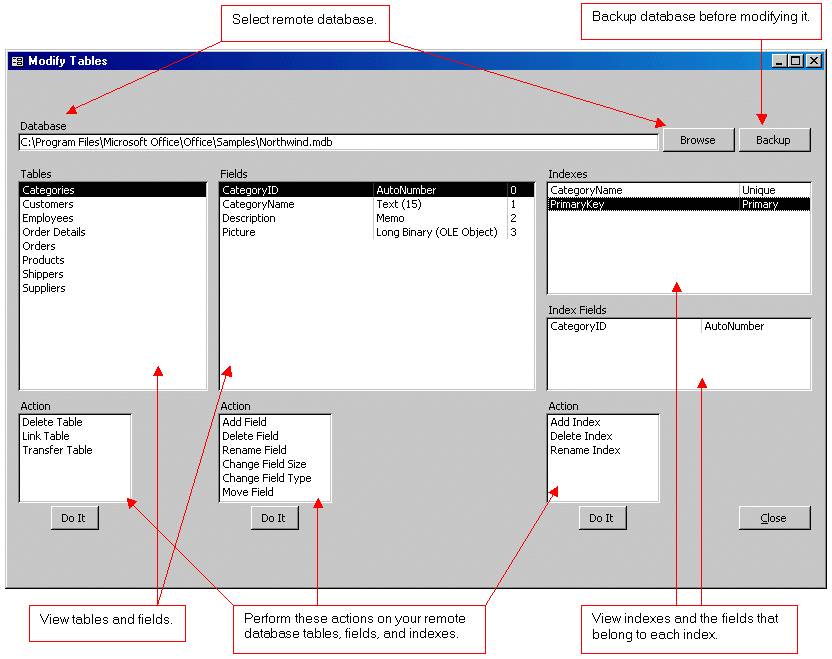
Wizard to Manage Remote Backend MS Access Database Tables Fields and Indexes

If you had an aisle-by-aisle grocery list wouldn't you spend less money on impulse items?

everything you need to create a professional corporate look mini-site is there.

Unlock Your Networking Potential with GNS3Vault
Viper Cache Was 77% Faster Than The Competetion

Understanding Stock Market Shorting eBook